
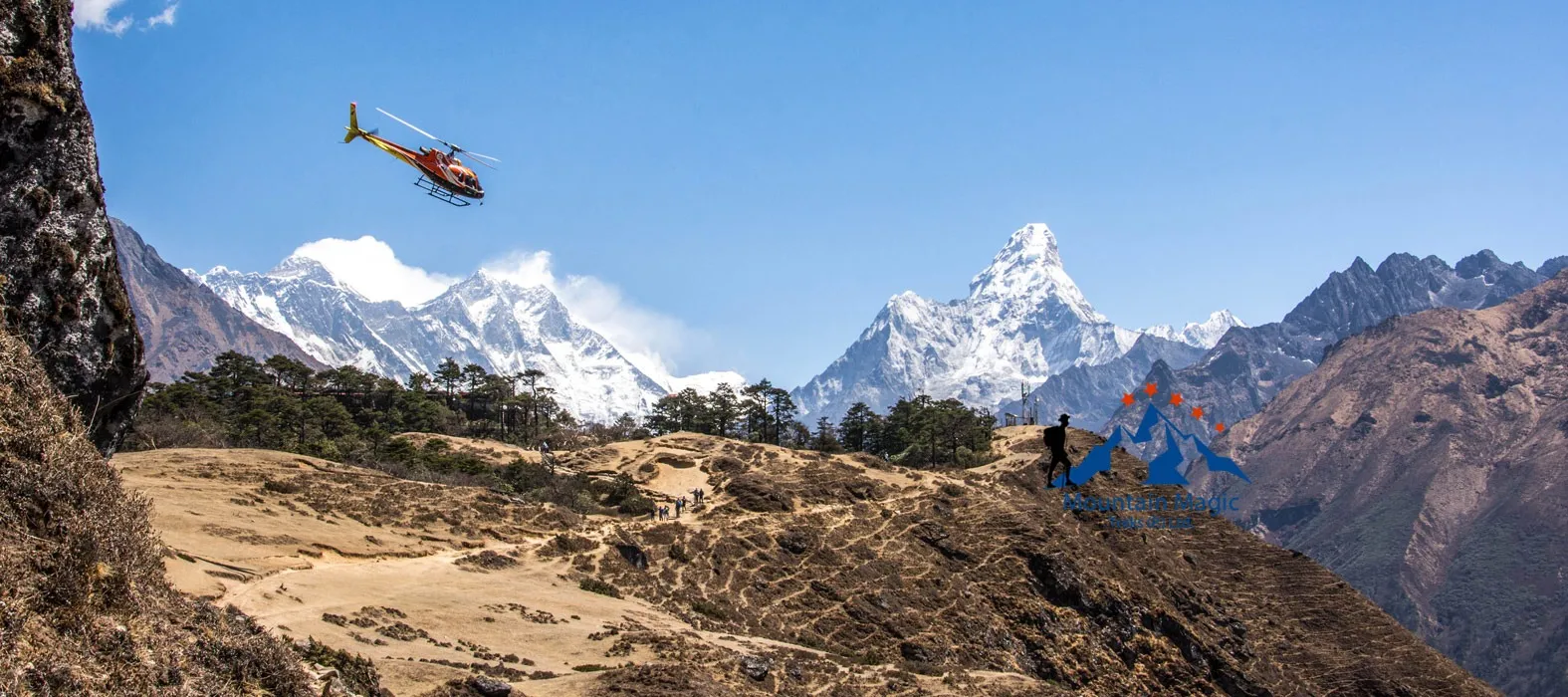
A trek to Everest Base Camp is not something you understand from a single photograph. The real experience comes from walking through the changing landscape, meeting people along the way, and slowly getting used to life at higher altitude.
The Everest Base Camp Trek With Helicopter Return gives travelers that full walking experience while offering a different way to finish the trip. After reaching the major highlights, the return is made by helicopter instead of retracing the entire trail on foot.
This makes the journey practical for travelers who want to spend more time experiencing the mountains and less time repeating the same route.
Start by Understanding the Pace
The Everest region rewards patience.
The first few days may feel easy compared with the higher sections, but that does not mean you should walk as fast as possible.
A Slow Start Helps Later
Your body needs time to adjust to several days of walking.
Keep your pace comfortable from the beginning.
Take short breaks when needed and avoid turning the early days into a race.
Saving energy early can make the later sections much more enjoyable.
Experience the Lower Khumbu
The trail from Lukla toward Phakding introduces you to the region gradually.
Green hills, rivers, stone walls, small homes, and suspension bridges are common sights.
Look at Everyday Mountain Life
The lower trail gives you a chance to see how people live in the Khumbu.
You may see locals carrying supplies along the trail or working around their homes and fields.
These ordinary scenes can become some of the most memorable parts of the trip.
The Everest region is not just a wilderness area. It is also a place where communities have lived and worked for generations.
Let Namche Be Your Adjustment Point
Namche Bazaar is a major stop on the route.
The climb toward it can be tiring, but arriving there feels rewarding because the landscape opens up and the mountains become more impressive.
Use the Extra Day Well
The itinerary includes an acclimatization day in Namche.
You can explore the village or take a short hike nearby.
Do not feel pressured to stay active all day.
Resting, eating well, and drinking enough water are also important parts of acclimatization.
Notice the Cultural Change at Tengboche
The route continues through forested sections before reaching Tengboche.
The village is well known for its Buddhist monastery and mountain views.
Travel With Respect
When visiting a monastery or another cultural site, follow local rules.
Speak quietly and ask before taking photographs of people.
You are entering a community with traditions that are different from those at home.
Taking a little time to understand those traditions makes the journey more meaningful.
Prepare for Higher Ground at Dingboche
Dingboche is where many travelers start noticing the altitude more strongly.
The air is thinner, and climbing can feel harder.
Do Not Judge Yourself by Distance
A short uphill section may take much longer than expected.
That is normal.
Your body is working with less oxygen than it had at lower elevations.
Walk slowly, take breaks, and tell your guide if you feel uncomfortable.
The itinerary includes another acclimatization day here before continuing toward the higher sections.
Watch the Environment Become Bare
After Dingboche, the scenery changes again.
Trees become less common, while rocks, glaciers, and high mountain slopes become the main features.
The Landscape Shows Your Progress
You do not need a sign telling you that you are getting higher.
The environment tells you.
The green hills are gone.
The valley becomes wider.
The air feels colder.
The mountains appear closer.
This gradual transformation is one of the strongest experiences of the trek.
Walk Through Lobuche With Purpose
Lobuche is one of the final major stops before Gorakshep.
At this point, the trek can feel very different from the first few days.
Protect Your Energy
Do not spend your remaining energy trying to walk quickly.
The higher sections require patience.
Keep your daypack manageable and carry enough water and snacks.
If you feel tired, take a short break rather than pushing until you are exhausted.
A steady approach is usually the better choice.
Remember the Stories at Thukla
The trail near Thukla contains memorials dedicated to climbers who lost their lives in the Everest region.
It is a quiet place where many trekkers naturally slow down.
Respect the Meaning of the Area
The memorials are a reminder that the mountains can be dangerous.
Everest is beautiful, but the environment is demanding.
Weather can change.
The altitude is serious.
The terrain can be difficult.
Take these challenges seriously throughout the journey.
Keep Gorakshep Simple
Gorakshep is located at roughly 5,125 meters.
At this elevation, simple activities can require more effort.
Carry Only the Essentials
For the walk toward Everest Base Camp, you do not need to carry your full luggage.
A small daypack is enough for most personal needs.
Consider carrying:
-
Water
-
Snacks
-
Warm clothing
-
Sunglasses
-
Sunscreen
-
Camera
-
Personal essentials
Keeping the load light can make the long day more manageable.
Make Your Base Camp Moment Count
The route to Everest Base Camp is one of the major highlights of the trip.
The listed elevation is about 5,364 meters.
The surrounding Khumbu landscape makes the final approach feel very different from the lower trail.
Stop and Take It In
When you reach Base Camp, take your photographs.
Then take a moment to simply look around.
You have walked through several environments to reach this point.
The glaciers and huge mountain walls around you are the result of that entire journey.
Do not let the excitement of reaching the destination make you forget to enjoy it.
See a Wider Side of Everest From Kala Patthar
Kala Patthar is another major highlight.
At approximately 5,545 meters, it is the highest point listed in the itinerary.
Early Morning Brings the Best Change
The climb usually starts early, when temperatures can be very cold.
But sunrise creates a beautiful transformation.
The first light slowly reaches the surrounding peaks.
Everest and the nearby mountains can look completely different within a short time.
The viewpoint offers a wider perspective than you get from the trail below.
Finish the Trek From the Sky
After completing the trekking section, the helicopter return provides a new way to experience the Khumbu.
The Everest Base Camp Trek With Helicopter Return allows you to see the same mountains from an aerial perspective after spending days walking through them.
See How Far You Actually Traveled
From the ground, valleys can feel enormous.
From the helicopter, trails look surprisingly small.
Villages become tiny dots.
Rivers and glaciers appear as parts of one connected landscape.
This final view can help you understand the scale of the journey much better.
Keep Your Return Plans Flexible
Helicopter flights depend on mountain conditions.
Clouds, wind, and visibility can affect operations.
Do Not Leave Yourself With a Tight Schedule
If you have an international flight after the trek, leave enough time between the expected helicopter arrival and your departure.
A little extra time can prevent a lot of stress.
Mountain travel requires flexibility, especially when flights are involved.
The Lessons Stay After the Trek
The Everest Base Camp Trek With Helicopter Return teaches more than physical endurance.
It teaches patience.
It teaches you to pay attention to your surroundings.
It shows why preparation matters.
It also reminds you that progress does not always mean moving quickly.
Some of the best parts of the journey happen when you slow down enough to notice them.
The Mountain Experience You Take Home
The destination may be Everest Base Camp, but the journey contains many smaller achievements.
You cross your first suspension bridge.
You reach Namche.
You adjust to the altitude at Dingboche.
You walk through the high valleys near Lobuche.
You stand at Base Camp.
You watch sunrise from Kala Patthar.
Then you look down from the helicopter and see the route from an entirely different angle.
That combination makes the Everest Base Camp Trek With Helicopter Return more than a simple trip to a famous location.
It is a gradual journey through changing landscapes, cultures, and challenges.
The helicopter may provide the final ride, but every step before it is what gives that final view its meaning.
FAQs
How long is the listed itinerary?
The listed itinerary is planned for 10 days.
Where are the acclimatization days?
Acclimatization days are included in Namche Bazaar and Dingboche.
How high is Everest Base Camp?
The listed elevation is approximately 5,364 meters.
What is the highest point?
Kala Patthar is approximately 5,545 meters above sea level.
Is the route to Base Camp walked?
Yes. Travelers complete the main trekking route to Everest Base Camp and Kala Patthar before the helicopter return.
Can the helicopter schedule change?
Yes. Mountain weather and visibility can affect helicopter operations, so travelers should keep some flexibility in their plans.
